
Urban-Ocean Nexus
This project elaborates an innovative approach to explore how urbanisation and blue economy development co-shape coastal and offshore spaces in Indonesia and the Netherlands.
As urbanisation expands the seaward frontier of infrastructure development and blue economy initiatives generate landward flows of people and materials, the projects focusses on the impacts of these intertwined transformations on coastal environments and communities. The project asks:
How does urban-blue frontier expansion reshape coastal and offshore spaces, and how do we address its environmental and social impacts?
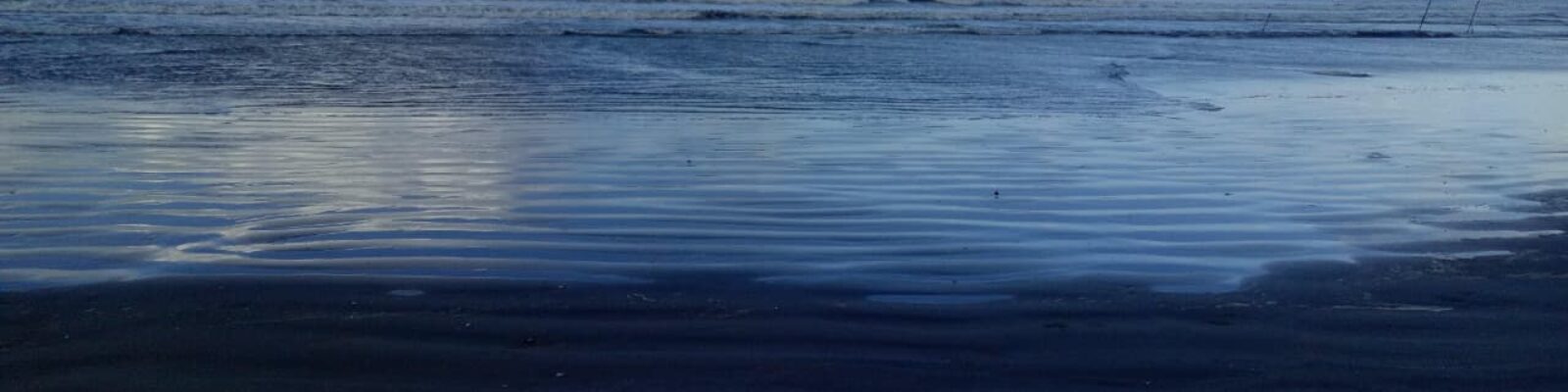
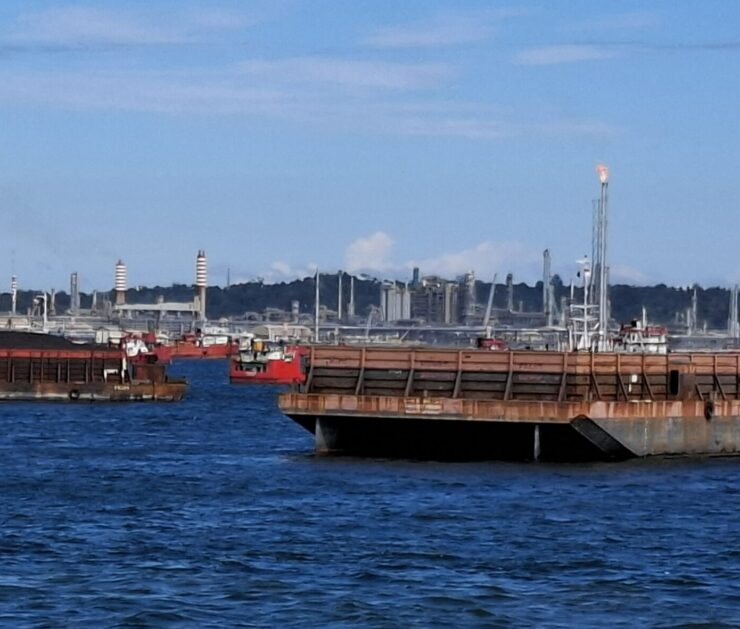
The project studies the expanding interfaces between city, coast and ocean in East Kalimantan’s Makassar Strait and the North Sea off the coast of the Netherlands. Here, infrastructure development, extraction, conservation and livelihoods are closely intertwined.
It brings together a community of practice to co-produce knowledge with researchers, planners, civil society and government partners. Through this work, the consortium seeks to develop practical ways of connecting marine and terrestrial urban spatial planning.
The project is organised into six work packages:
- Mapping sectors and actors. Maps who is involved in marine spatial planning and urban planning in East Kalimantan and the Netherlands, and sets up the Community of Practice.
- Modelling environmental impacts. Examines the spatial and environmental implications of urban-blue frontier expansion, including land cover, soil conditions, water quality, groundwater depletion, erosion, and abrasion.
- Social impacts of frontier expansion. Studies changing water-society relations, livelihood change, social inclusion, and contestations across different social groups in Indonesia and the Netherlands.
- Planetary health and well-being. Investigates how environmental change relates to human health, nutritional status, disease exposure, and the health of coastal communities and ecosystems.
- Strengthening governance. Explores how marine spatial planning and urban planning can be better aligned through governance learning, stakeholder engagement, and policy exchange.
- Knowledge exchange and capacity strengthening. Consolidates exchange between researchers, students, and professionals through student mobility, professional learning, and curriculum-linked collaboration.
Together, these work packages build a comparative, transdisciplinary platform for co-creating knowledge, governance and pathways toward more inclusive, resilient and sustainable coastal futures.
Research Partners


 |
 |
 |
 |
  |
 |